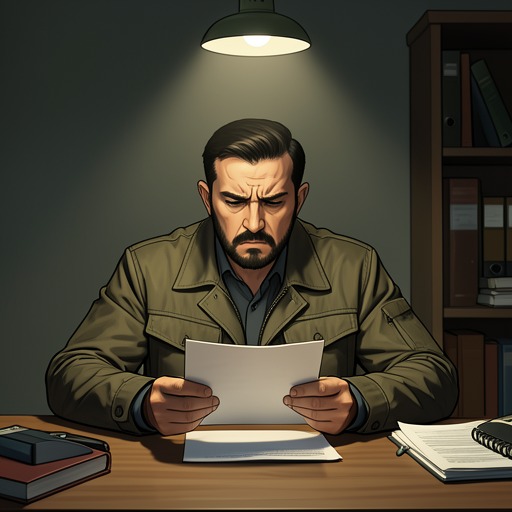
Cavaignac’s July 1898 speech on the Dreyfus affair
An Officer and a SpyCavaignac’s July 1898 speech on the Dreyfus affair was a public attempt to settle Alfred Dreyfus’s guilt by presenting three intercepted messages as decisive proof. Delivered by the new Minister of War before the Chamber of Deputies (France), it drew parliamentary acclaim and an order to print and distribute 36,000 copies of the evidence. In the novel’s account, the speech instead sharpens the dispute: Georges Picquart recognizes that the documents do not prove what Cavaignac claims, and writes to the prime minister the next day to challenge them.
Background and Setting
The speech takes place amid a controversy over the Dreyfus secret file and the military’s handling of information. Earlier, an anonymous article in L’Éclair had asserted that a secret body of evidence proved Alfred Dreyfus’s guilt and demanded its publication. Georges Picquart, who had recently taken possession of the dossier, saw the article’s appearance as a leak and counted the people who knew of the file: senior officers, intelligence personnel, the judges, the president, his doctor, and eventually Mathieu Dreyfus. The count reached twenty before Georges Picquart could even reckon how many others Mathieu might have told. The leak, he feared, might provoke the military leadership to restrict the investigation rather than clarify the case.
The political stakes were heightened by a longer pattern in which prejudice and assertion shaped how evidence was received. At Alfred Dreyfus’s degradation ceremony, a Foreign Ministry official and Jean Sandherr interpreted his composure through antisemitic assumptions, treating Jewish identity as evidence of deficient patriotism and pride. Earlier, when Alfred Dreyfus challenged a low mark from Georges Picquart, he asked directly whether his Jewishness had affected the judgment. And at the first trial, Hubert-Joseph Henry pointed to Alfred Dreyfus and identified him as the traitor, invoking an unnamed informant rather than evidence tested in open court. Against that background, Cavaignac’s formal presentation of intercepted messages matters not only for what the documents say, but for the authority his office lends to their interpretation.
The Speech and Its Claims
On the evening of Thursday, 7 July, Georges Picquart is in the garden of Aline Ménard-Dorian’s mansion, before a concert, talking with Émile Zola about the effect of the new government on Zola’s appeal. Georges Clemenceau arrives with Fernand Labori and an evening newspaper. He reports that Cavaignac has made his first speech in the Chamber as Minister of War and claimed to have proved Alfred Dreyfus a traitor. Georges Picquart learns of the address through the newspaper and the account given by Georges Clemenceau; he is not presented as having heard the speech in person.
Cavaignac cites three messages from secret intelligence files, omitting the sender’s and addressee’s names as he reads them. The first is the message from the secret dossier referring to twelve master plans of Nice supplied by a man identified only as D. The second says that D has brought many interesting matters; Georges Picquart does not recognize it. The third is dated 1896 and says that, if questions are asked in Rome, the writer will deny dealings with a Jewish man and instructs the recipient to say the same, so that no one will know what happened to him. By placing the three documents together as evidence against Alfred Dreyfus, Cavaignac presents them as a settled case. But the withholding of names, the unfamiliar second message, and the differences in the documents’ dates and contents leave questions that his confident conclusion does not answer.
Public Effect and Picquart’s Challenge
The political effect is immediate. Georges Clemenceau tells those at the mansion that the Chamber has risen in acclamation and passed a motion ordering 36,000 copies of the evidence to be printed and posted in every commune in France. The speech thus does more than make an argument before legislators: it authorizes a mass circulation of the government’s account. Fernand Labori calls the situation a disaster unless they can counter it, while Georges Picquart responds in disbelief at the public reception. The contrast is stark: evidence whose interpretation remains contestable is treated by the assembly as a final resolution.
The next day, with Fernand Labori’s help, Georges Picquart drafts an open letter to Prime Minister Henri Brisson rather than to the Minister of War. He states that the two documents dated 1894 cannot be applied to Alfred Dreyfus and that the document dated 1896 shows every sign of being a forgery. He further argues that the Minister of War has been misled, as have those who accepted the relevance of the first two documents and the authenticity of the last. The letter does not merely dispute Cavaignac’s conclusion; it contests the evidentiary basis on which the government has invited the country to adopt it.
Narrative Significance
The episode reverses the expected direction of secrecy. The Dreyfus secret file had been protected from public scrutiny, yet its reported existence and contents circulate through newspapers, parliamentary speech, and a proposed nationwide print run. Instead of ending the affair, disclosure produces a new contest over who may interpret the documents and whether the state’s confidence can substitute for verification. Cavaignac’s speech gives official force to a claim; Georges Picquart’s letter answers with distinctions among the documents that the public presentation had flattened.
The scene is also mediated through Georges Picquart’s retrospective first-person account: he hears of the speech at a gathering and reads its contents in the newspaper rather than witnessing the parliamentary performance. That narrative arrangement keeps the reader close to the shock of the announcement while making its evidentiary claims available for scrutiny. The author’s note describes the book as a novelistic retelling of real events and explicitly says that Georges Picquart never wrote the secret account imagined by the book. The speech’s dialogue and private circumstances therefore belong to the novel’s dramatization, not to a claimed historical transcript. Within that form, the episode makes public certainty itself part of the mystery: the documents are displayed as an answer just as Georges Picquart identifies reasons they cannot bear the weight placed upon them.